Thank you for writing to us. One of our executive will reach back to you through your submitted medium. In case there’s an urgency, feel free to connect over WhatsApp for faster response.
Prefer calling? Dial +9108045134631 (International callers) or 08045134631 (Indian callers).
Monoblock Valve: A Comprehensive Overview
A Monoblock valve is a type of hydraulic valve that is designed as a single, compact unit. It plays a crucial role in controlling the flow,
Design and Structure of a Monoblock Valve
The primary characteristic of a Monoblock valve is its monoblock construction, where multiple valve functions
Monoblock valves typically
Valve Body: The main housing that contains the valve’s internal components and channels. It is usually machined from a single piece of metal.
Control Spools or Ball Mechanisms: These components control the flow direction and the opening
Ports: The inlet and outlet ports that allow hydraulic fluid to enter and exit the valve. These ports are typically designed for high-pressure environments.
Spring or Actuator Mechanism: Some block valves are spring-loaded, while others use solenoids or hydraulic actuators to control the valve’s movement and function.
Seals and O-rings: These ensure that there are no leaks between the internal components, maintaining the integrity of the hydraulic fluid system.
Working Principle of a Monoblock Valve
Flow Control: The valve’s internal mechanism, such as a spool or ball,
Pressure Relief: Many monoblock valves include integrated pressure relief features.
Direction Control: Monoblock valves can also control the direction of fluid flow. For example, a directional control valve in a monoblock
Types of Monoblock Valves
Monoblock valves come in various types, each designed for specific tasks within a hydraulic system. The most common types include:
Directional Control Valves:
These valves control the direction of the hydraulic fluid. They are used to change the flow direction,
Flow Control Valves:
Flow control valves regulate the flow rate of the hydraulic fluid in a system. conditions.
Pressure Relief Valves:
These valves are designed to maintain a preset maximum pressure in the hydraulic system. When the system’s pressure exceeds the set limit,
Check Valves:
Check valves allow fluid to flow in one direction only,
Combination Valves:
Some monoblock valves combine multiple valve functions into a single unit, such as a directional control valve with built-in pressure relief and flow control.
Advantages of Monoblock Valves
Compact Design:
One of the primary advantages of Monoblock valves is their compact design. Since all components are integrated into a single unit,
Ease of Installation:
The single-unit design of Monoblock valves simplifies installation.
Cost-Effectiveness:
Monoblock valves are generally more cost-effective than traditional valves that require multiple parts.
Reduced Leak Points:
With fewer parts and integrated construction,
Improved Performance:
The integration of multiple valve functions into a single unit reduces the number of components that could potentially fail,
Applications of Monoblock Valves
Monoblock valves are used in a wide range of applications across various industries, including:
Construction Machinery:
Monoblock valves are used in construction equipment like excavators, loaders, and backhoes to control the movement of hydraulic cylinders and motors.
Agricultural Equipment:
In agriculture, Monoblock valves control the operation of hydraulic systems in tractors, combine harvesters, and other farm machinery.
Industrial Automation:
These valves are widely used in industrial machines and production lines for controlling fluid flow to actuators, which is essential in automation processes.
Mobile Equipment:
Monoblock valves are commonly found in mobile machinery like cranes, forklifts, and material handling systems, where they manage the hydraulic flow for various operations.
Automotive Systems:
Monoblock valves are used in automotive applications, such as power steering systems and lifting mechanisms in heavy-duty vehicles.
Conclusion
Monoblock valves are essential components in hydraulic systems, offering a compact, cost-effective, and reliable solution for controlling fluid flow, pressure, and direction. Their integrated design minimizes installation time
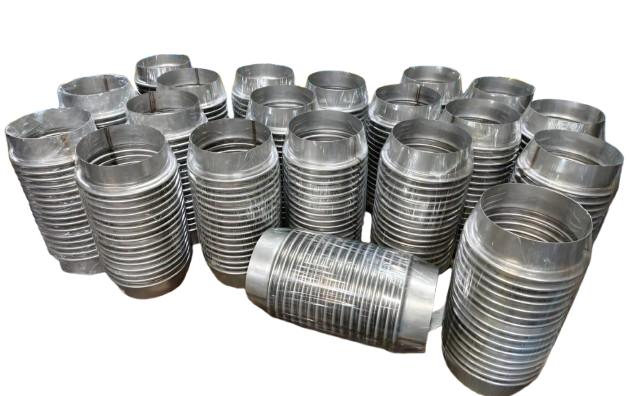
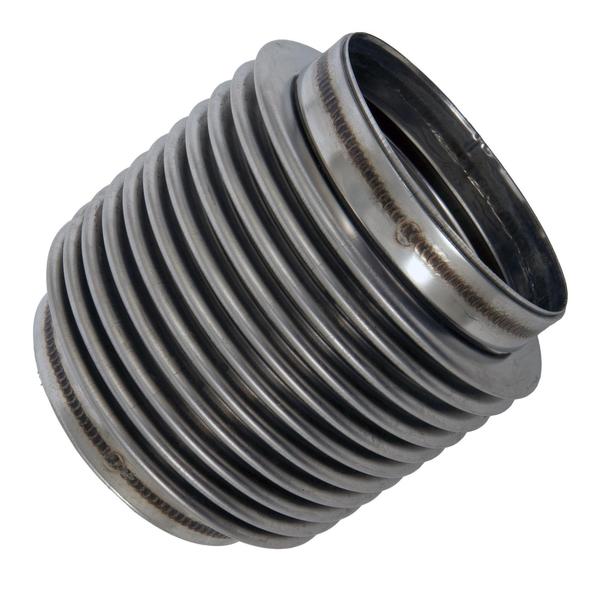
Stainless Steel Bellows — Product Description
Product Name: Stainless Steel Bellows / Flexible Expansion Joint
Material:
High-grade Stainless Steel (SS304 / SS316)
Excellent corrosion resistance, high temperature performance
Design & Construction:
Precision-formed corrugated bellows for maximum flexibility
Seamlessly welded ends for structural integrity
Can be single- or multi-plied depending on application
Optional end fittings/flanges for easy installation
Function:
Stainless Steel Bellows are designed to:
✔ Absorb thermal expansion and contraction
✔ Compensate for misalignment and vibration
✔ Reduce stress in piping systems
✔ Enhance durability under pulsation and pressure variations
Applications:
Automotive EGR systems, exhaust piping
HVAC systems & ducting
Industrial piping & pressure lines
Turbocharger connections
Chemical, petrochemical, power plants
Key Benefits:
✨ High flexibility under thermal cycling
✨ Corrosion & oxidation resistance
✨ Long service life
✨ Handles high temperature & pressure environments
✨ Reduces noise and mechanical stress
Specifications (Typical):
Material Grade: SS304 / SS316
Thickness: 0.5–1.5 mm (varies with design)
Diameter: Custom sizes available
Temperature Range: –50°C to 800°C+
Pressure Range: Up to 20 bar+ depending on series
Installation:
Fit between mating flanges with gaskets
Torque evenly to ensure leak-free sealing
Avoid twisting during assembly
📝 Why Choose Stainless Steel Bellows?
Stainless Steel Bellows combine robust construction with exceptional flexibility — making them ideal for systems where thermal movement, vibration, and mechanical stress are continuous challenges. Their durability extends equipment life and minimizes maintenance downtime.
xhaust Bellows at Sonu Hose Pipe – Flexible Solutions for High-Temperature Exhaust Systems
At Sonu Hose Pipe, we specialize in supplying high-quality Exhaust Bellows engineered to absorb thermal expansion, vibration, and misalignment in exhaust and ducting systems. Designed for demanding industrial and automotive environments, our exhaust bellows ensure reliable performance, extended system life, and enhanced safety under extreme operating conditions.
With a strong commitment to quality, precision manufacturing, and customer satisfaction, Sonu Hose Pipe provides exhaust bellows that meet the requirements of modern engines, power plants, generators, and industrial exhaust applications.
What Are Exhaust Bellows?
Exhaust bellows are flexible expansion joints installed in exhaust systems to compensate for movement caused by heat expansion, vibration, and mechanical stress. As exhaust gases flow at high temperatures, system components expand and contract. Exhaust bellows protect rigid pipes and connected equipment by absorbing this movement, preventing cracks, leaks, and premature failure.
They play a vital role in maintaining exhaust system integrity and reducing noise and vibration.
Types of Exhaust Bellows Available at Sonu Hose Pipe
We offer a wide range of exhaust bellows to suit various industrial and commercial applications:
Metallic Exhaust Bellows
Made from high-grade stainless steel
Resistant to extreme temperatures and corrosion
Ideal for heavy-duty and high-pressure applications
Non-Metallic Exhaust Bellows
Constructed using reinforced fabric or composite materials
Suitable for lower pressure and temperature ranges
Excellent vibration and noise absorption
Single & Multi-Ply Bellows
Single-ply for standard applications
Multi-ply for enhanced strength and fatigue resistance
Customized Exhaust Bellows
Tailor-made designs based on size, temperature, and pressure requirements
Flanged or welded end connections available
Key Features of Exhaust Bellows from Sonu Hose Pipe
High Temperature Resistance – Designed to withstand extreme exhaust heat
Vibration Absorption – Protects engines and pipelines from mechanical stress
Thermal Expansion Compensation – Prevents damage due to temperature variations
Leak-Proof Construction – Ensures safe exhaust gas flow
Corrosion Resistance – Suitable for harsh operating environments
Long Service Life – Built for durability and consistent performance
Applications of Exhaust Bellows
Exhaust bellows supplied by Sonu Hose Pipe are widely used in:
Diesel generator exhaust systems
Automotive and commercial vehicle exhausts
Power plants and turbines
Marine engines
Industrial boilers and furnaces
Compressors and blowers
HVAC and ducting systems
Their flexibility and strength make them essential components in systems exposed to continuous thermal cycling.
Quality Assurance at Sonu Hose Pipe
Quality is at the core of everything we do at Sonu Hose Pipe. Our exhaust bellows undergo rigorous inspection and testing to ensure:
Dimensional accuracy
Temperature and pressure endurance
Proper flexibility and movement absorption
Secure welding and joint integrity
Compliance with industry standards
This ensures our customers receive products that perform reliably even under severe operating conditions.
Advantages of Choosing Sonu Hose Pipe
Wide Range of Exhaust Bellows – Standard and customized solutions
Technical Support – Expert guidance for proper selection and installation
Consistent Quality – Trusted performance across applications
Competitive Pricing – High value with cost-effective solutions
Customer-Focused Service – Long-term support and reliability
Installation & Maintenance Benefits
Exhaust bellows from Sonu Hose Pipe are designed for easy installation and minimal maintenance. When installed correctly, they:
Reduce stress on exhaust pipelines
Minimize noise and vibration
Prevent system damage
Improve overall efficiency
Routine inspections help ensure optimal performance and extended service life.
Why Exhaust Bellows Are Essential in Exhaust Systems
Without proper expansion joints, exhaust systems are prone to cracking, leakage, and costly repairs. Exhaust bellows play a crucial role by:
Protecting connected equipment
Enhancing system reliability
Improving safety and operational stability
Sonu Hose Pipe ensures these benefits through robust design and dependable materials.
Contact Sonu Hose Pipe for Exhaust Bellows Solutions
If you are looking for durable, high-performance Exhaust Bellows, Sonu Hose Pipe is your trusted source. Our team is ready to provide reliable products and expert support tailored to your specific exhaust system requirements.
Sonu Hose Pipe – Delivering Flexible, Heat-Resistant Solutions for Modern Exhaust Systems.
Putzmeister Agitator Hydraulic Motor – OMH-500
Model No: OMH-500
Application: Concrete Pump Agitator Drive
OEM Part No: 238130001 (commonly associated)
Overview:
The OMH-500 hydraulic motor is a robust and high-torque motor engineered for use in Putzmeister concrete pumps, specifically as the agitator motor responsible for driving the mixing paddle within the hopper. Its primary function is to keep the concrete in constant motion, preventing segregation and ensuring a consistent, pumpable mixture.
Key Features:
�� High-Torque Performance:
Designed with a displacement of approximately 500 cc/rev, the OMH-500 delivers high torque at low speeds—ideal for heavy-duty mixing tasks within the concrete hopper.
�� Smooth Agitation Control:
Supports smooth and continuous rotation of the agitator paddles to maintain a homogenous concrete mix, even with coarse aggregates or varying slump levels.
��️ Heavy-Duty Construction:
Built with reinforced cast iron housing and precision-machined internal components for maximum durability under rugged construction site conditions.
�� Mounting & Fitment:
Standard 4-bolt SAE mounting flange and 35mm splined shaft, ensuring a direct replacement fit for OEM Putzmeister setups.
�� Hydraulic Efficiency:
Designed for low leakage and high volumetric efficiency, contributing to better fuel economy and longer hydraulic component life.
Technical Specifications (Typical):
Parameter Specification
Displacement ~500 cc/rev
Max Continuous Speed 155 RPM
Max Intermittent Speed 200 RPM
Max Torque Output Up to 1,200 Nm
Shaft Type Splined (35mm standard)
Mounting Flange 4-bolt SAE
Port Size G1/2' (BSP or SAE, varies)
Operating Pressure Up to 210–250 bar (approx.)
Fluid Type Hydraulic oil (ISO VG 46/68)
Weight Approx. 20–25 kg
Applications:
✅ Putzmeister Concrete Pumps – Agitator Motor (e.g., BSF, TK, P 718 models)
✅ Suitable for retrofitting or replacing damaged motors in hopper mixer drives
✅ Used in OEM and aftermarket repair of ready-mix and shotcrete pump systems
Benefits:
Prevents Concrete Hardening in Hopper
Continuous mixing action prevents concrete from settling or solidifying during pauses in pumping.
Reduces Maintenance Downtime
Durable design reduces the need for frequent servicing or premature replacement.
Improves Pump Efficiency
Ensures consistent flow of well-mixed concrete, protecting the main pumping cylinders.