Noida
08048032162
+919311288288

Items tagged with 'lifting rigging'

68179d65be22ee500d53ff54 Card 2

product image
manufacturer and tools

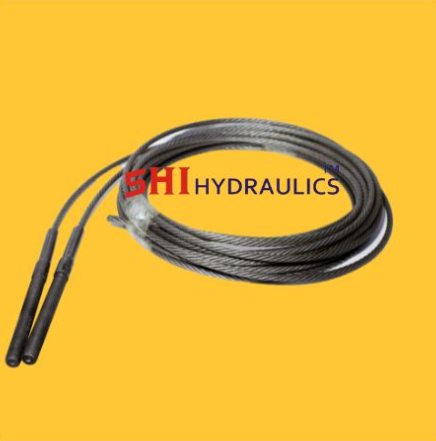
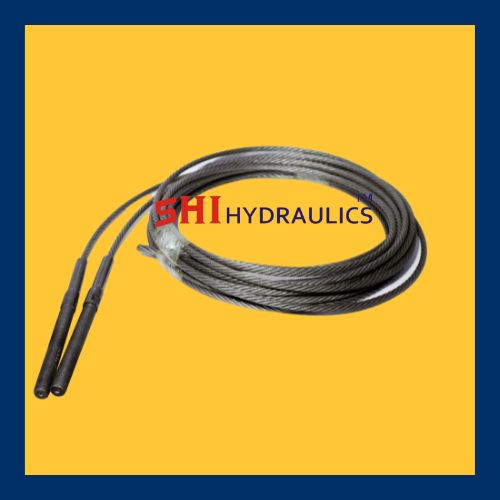
A wire rope is a strong, flexible, and durable cable made from multiple strands of steel or other metal wires twisted together around a central core. It is widely used for lifting, hoisting, towing, and securing heavy loads in industries such as construction, marine, mining, and transportation. Components of Wire Rope Wires – Individual metal strands, typically made of steel or stainless steel, providing strength and flexibility. Strands – Groups of wires twisted together to form the rope’s outer structure. Core – The central support structure, which can be made of fiber (for flexibility), steel (for strength), or synthetic materials. Key Features High Strength – Capable of handling heavy loads and high-tension applications. Flexibility – Designed to bend around pulleys and sheaves without breaking. Abrasion Resistance – Some ropes are galvanized or coated for extra protection against wear and corrosion. Fatigue Resistance – Engineered to withstand repeated bending and stress. Common Types of Wire Rope Galvanized Wire Rope – Coated with zinc for corrosion resistance. Stainless Steel Wire Rope – Highly resistant to rust, ideal for marine and chemical environments. Compacted Wire Rope – Stronger and smoother due to compressed strands. Rotation-Resistant Wire Rope – Designed for lifting applications where load twisting must be minimized. Common Applications Cranes and Hoists – Used in construction and industrial lifting. Marine and Fishing – Essential for ship rigging, mooring, and trawling. Mining and Oil Industry – Used for drilling, winches, and lifting equipment. Bridges and Suspension Systems – Provides structural support in suspension bridges and cable-stayed structures.

68179d65be22ee500d53ff54 Card 2

product image
manufacturer

Rope Wire rope is a strong fiber made of many twisted strands of steel wire, it gives exceptional strength, flexibility and durability Widely used in various industries such as construction, mining, shipping and industrial machinery, it is manufactured to handle heavy loads, be suitable for lifting, rigging. It was ideal for applications The wire rope consists of several strands, each of which is made up of individual strands, twisted around the wire or steel core, increasing its strength and stability Regardless of the tensile strength above, wire rope remains flexible, allowing it to bend around pulleys and other components without compromising its integrity or being treated, making them suitable for outdoor marine environments where water and chemical solvents abound Because of its flexibility in thickness, lay type and core material, wire rope is suitable for many specific applications

68179d65be22ee500d53ff54 Card 2

product image
manufacturer and tools

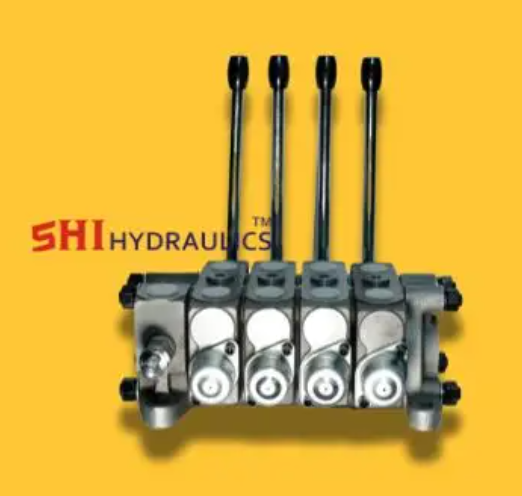
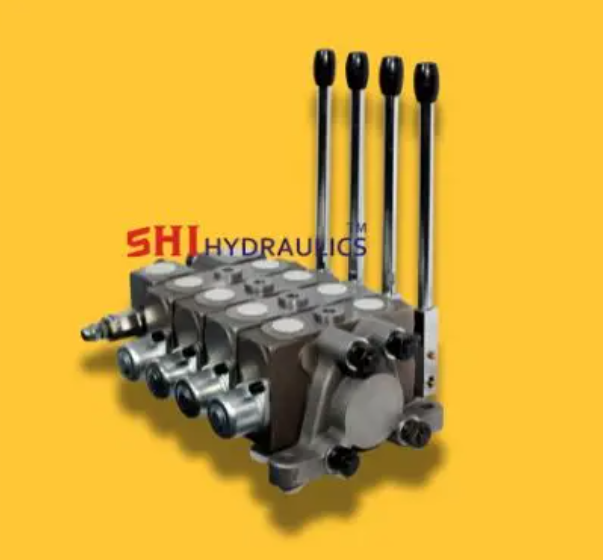
Monoblock Valve: A Comprehensive Overview A Monoblock valve is a type of hydraulic valve that is designed as a single, compact unit. It plays a crucial role in controlling the flow, Design and Structure of a Monoblock Valve The primary characteristic of a Monoblock valve is its monoblock construction, where multiple valve functions Monoblock valves typically Valve Body: The main housing that contains the valve’s internal components and channels. It is usually machined from a single piece of metal. Control Spools or Ball Mechanisms: These components control the flow direction and the opening Ports: The inlet and outlet ports that allow hydraulic fluid to enter and exit the valve. These ports are typically designed for high-pressure environments. Spring or Actuator Mechanism: Some block valves are spring-loaded, while others use solenoids or hydraulic actuators to control the valve’s movement and function. Seals and O-rings: These ensure that there are no leaks between the internal components, maintaining the integrity of the hydraulic fluid system. Working Principle of a Monoblock Valve Flow Control: The valve’s internal mechanism, such as a spool or ball, Pressure Relief: Many monoblock valves include integrated pressure relief features. Direction Control: Monoblock valves can also control the direction of fluid flow. For example, a directional control valve in a monoblock Types of Monoblock Valves Monoblock valves come in various types, each designed for specific tasks within a hydraulic system. The most common types include: Directional Control Valves: These valves control the direction of the hydraulic fluid. They are used to change the flow direction, Flow Control Valves: Flow control valves regulate the flow rate of the hydraulic fluid in a system. conditions. Pressure Relief Valves: These valves are designed to maintain a preset maximum pressure in the hydraulic system. When the system’s pressure exceeds the set limit, Check Valves: Check valves allow fluid to flow in one direction only, Combination Valves: Some monoblock valves combine multiple valve functions into a single unit, such as a directional control valve with built-in pressure relief and flow control. Advantages of Monoblock Valves Compact Design: One of the primary advantages of Monoblock valves is their compact design. Since all components are integrated into a single unit, Ease of Installation: The single-unit design of Monoblock valves simplifies installation. Cost-Effectiveness: Monoblock valves are generally more cost-effective than traditional valves that require multiple parts. Reduced Leak Points: With fewer parts and integrated construction, Improved Performance: The integration of multiple valve functions into a single unit reduces the number of components that could potentially fail, Applications of Monoblock Valves Monoblock valves are used in a wide range of applications across various industries, including: Construction Machinery: Monoblock valves are used in construction equipment like excavators, loaders, and backhoes to control the movement of hydraulic cylinders and motors. Agricultural Equipment: In agriculture, Monoblock valves control the operation of hydraulic systems in tractors, combine harvesters, and other farm machinery. Industrial Automation: These valves are widely used in industrial machines and production lines for controlling fluid flow to actuators, which is essential in automation processes. Mobile Equipment: Monoblock valves are commonly found in mobile machinery like cranes, forklifts, and material handling systems, where they manage the hydraulic flow for various operations. Automotive Systems: Monoblock valves are used in automotive applications, such as power steering systems and lifting mechanisms in heavy-duty vehicles. Conclusion Monoblock valves are essential components in hydraulic systems, offering a compact, cost-effective, and reliable solution for controlling fluid flow, pressure, and direction. Their integrated design minimizes installation time

68179d65be22ee500d53ff54 Card 2

product image
Control Valve

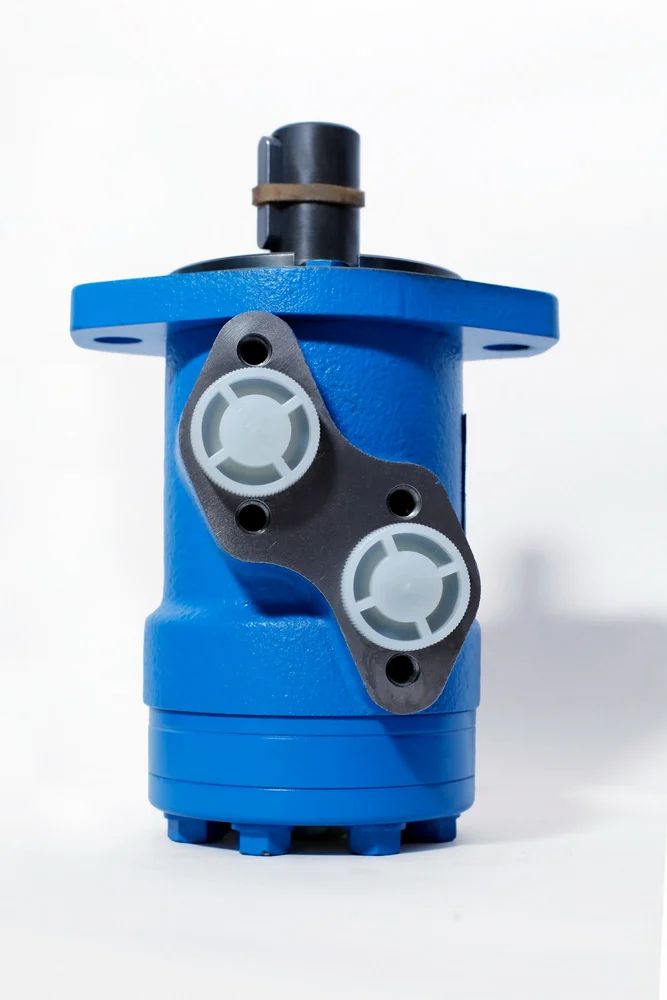
Orbit Hydraulic Motors Orbit Hydraulic Motors at Sonu Hose Pipe Overview: Sonu Hose Pipe offers high-performance Orbit Hydraulic Motors that provide reliable power for a wide variety of hydraulic applications. Our Orbit motors are designed to deliver smooth, efficient operation with high torque and compact design, making them ideal for industrial, construction, and agricultural machinery. These motors are engineered to perform in the toughest conditions, ensuring optimal performance and long-lasting reliability. Motor Speed 1000 RPM Type Hydraulic Motor Material Cast Iron Phase Single Phase Color Blue Voltage 230 V Frequency 50 Hz Usage/Application Industrial Brands: HDD Machine Fig 1: Hydraulic Motor Hydraulic motors are sophisticated mechanical devices that excel in converting the force of pressurised hydraulic fluids into both torque and angular movement, making them pivotal components in many industrial applications. These motors offer robust and precise performance, providing the driving force behind numerous hydraulic systems, from heavy machinery to automation processes, where their efficiency and reliability shine. 310 CC & 390 CC all. Key Features: Compact and Efficient: Orbit hydraulic motors are designed with a small, compact structure while maintaining high torque output, making them perfect for applications where space is limited. Smooth and Continuous Operation: These motors provide smooth, continuous, and efficient power transmission, ensuring consistent system performance even under heavy loads. High Torque at Low Speed: Orbit hydraulic motors are ideal for applications requiring high torque at low rotational speeds, offering superior control and power delivery. Durable Construction: Built with high-quality materials, these motors are highly resistant to wear and tear, ensuring durability and longevity in harsh environments. Flexible Mounting and Configuration: Available with various shaft options, mounting types, and pressure ratings, Sonu's Orbit hydraulic motors can be customized to suit specific application requirements. Low Maintenance: Thanks to their robust design, these motors are low-maintenance and offer long-term performance with minimal downtime. Types of Orbit Hydraulic Motors: Fixed Displacement Orbit Motors: These motors provide a fixed displacement per revolution and are ideal for simple applications where consistent speed and torque are required. Variable Displacement Orbit Motors: These motors allow you to vary the displacement, providing better flexibility and efficiency in systems where the flow and speed may need to adjust dynamically. Applications: Construction Equipment: Orbit motors are widely used in machines like skid steers, loaders, and excavators, providing power to various hydraulic systems such as steering, lifting, and digging operations. Agricultural Machinery: Orbit motors provide reliable power for agricultural equipment such as tractors, harvesters, and sprayers, enabling precise control over hydraulic functions. Material Handling: Power conveyors, winches, hoists, and lifts in material handling equipment, ensuring smooth operation even under load. Mining Equipment: Orbit motors are often used in mining machinery to power hydraulic systems that drive drilling and excavation operations. Marine and Offshore: Due to their compact size and high torque, Orbit motors are used in marine hydraulic systems, including steering mechanisms, winches, and other deck machinery.

68179d65be22ee500d53ff54 Card 2

product image
manufacturer and tools

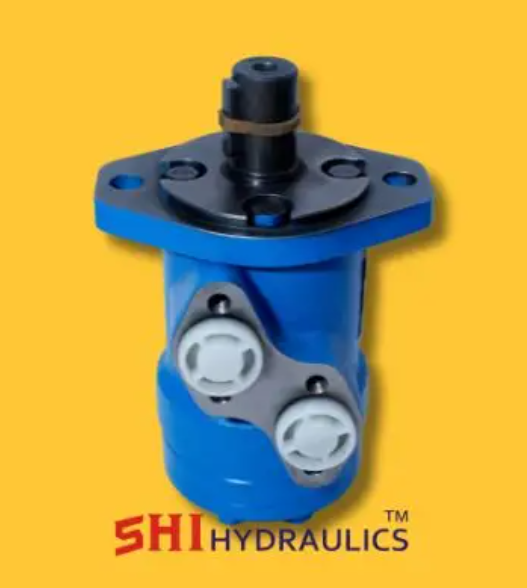
Hydraulics Motors Hydraulics Motors is a mechanical actuator that converts hydraulic energy (fluid power) into rotational mechanical energy. It is part of the broader category of hydraulic machinery used in a variety of industrial applications, from manufacturing to construction, where rotary motion is required. Hydraulic motors are powered by pressurized hydraulic fluid supplied by a pump, and they are capable of generating high torque at low speeds, making them essential for demanding tasks The hydraulic motors operates on the principle of fluid power, which involves the use of pressurized fluid to generate motion. A hydraulic consists of an enclosed rotor or shaft connected to gears, pistons, or other mechanical components, Pressurized Fluid Inflow: The hydraulic pump sends pressurized fluid to the hydraulic through an inlet port. Rotational Motion: As the fluid enters the it pushes against the internal components (such as gears or pistons), causing the rotor or shaft to rotate. Exhaust Flow: Once the fluid has passed through the , it exits via an outlet port, typically at a lower pressure than it entered. The rotational speed and torque output of the are determined by the pressure of the fluid and the design of the motor itself. Hydraulic motors can produce high Types There are several types of hydraulic motors, each designed for specific applications and performance requirements. These include: Gear: External Gear These consist of two meshed gears that rotate to generate torque. The fluid is directed between the gears, causing them to spin. Internal Gear : These have a smaller gear rotating inside a larger gear. They are more efficient than external gear motors and are capable of producing higher torque output. Vane These use sliding vanes mounted on a rotor to create pressure chambers as the spins. The vanes push against the walls of the housing, generating rotational motion. V Piston : Axial Piston : In these motors, pistons are arranged parallel to the shaft and move back and forth. The fluid forces the pistons to generate motion along the shaft. Radial Piston Here, the pistons are arranged radially around the motor shaft. These motors are known for their ability to generate high torque at lower speeds, Rotary Vane These motors consist of a rotor and vanes that slide in and out to create pressurized chambers. The chambers drive the motor’s Applications Construction Machinery: Hydraulic motors are integral to the operation of equipment like excavators, cranes, bulldozers, and wheel loaders, Agriculture: These motors drive implements such as augers, Marine and Offshore: Hydraulic motors are used to power winches, thrusters, and other machinery in marine vessels and offshore oil rigs. Industrial Automation: Automotive: In automotive applications, hydraulic motors are used in systems such as steering, lifting equipment, or as part High Torque at Low Speeds: Efficiency: Compact Design: Durability and Reliability: T Precise Control: Leakage and Fluid Loss: Noise and Heat Generation: Maintenance: Sensitivity to Contaminants: Vane motors use a rotor with sliding vanes that are forced outward by centrifugal force as the rotor turns. The vanes create pressurized chambers, which generate rotational motion. Vane motors are known for smooth operation and high efficiency, particularly at low speeds, and are often used in applications where quiet and steady performance is required. Axial Piston Motors: These motors have pistons arranged parallel to the motor shaft. As hydraulic fluid forces the pistons to move back and forth, it causes the motor shaft to rotate.

68179d65be22ee500d53ff54 Card 2

product image
manufacturer and tools

Monoblock Valve: A Comprehensive Overview A Monoblock valve is a type of hydraulic valve that is designed as a single, compact unit. It plays a crucial role in controlling the flow, Design and Structure of a Monoblock Valve The primary characteristic of a Monoblock valve is its monoblock construction, where multiple valve functions Monoblock valves typically Valve Body: The main housing that contains the valve’s internal components and channels. It is usually machined from a single piece of metal. Control Spools or Ball Mechanisms: These components control the flow direction and the opening Ports: The inlet and outlet ports that allow hydraulic fluid to enter and exit the valve. These ports are typically designed for high-pressure environments. Spring or Actuator Mechanism: Some block valves are spring-loaded, while others use solenoids or hydraulic actuators to control the valve’s movement and function. Seals and O-rings: These ensure that there are no leaks between the internal components, maintaining the integrity of the hydraulic fluid system. Working Principle of a Monoblock Valve Flow Control: The valve’s internal mechanism, such as a spool or ball, Pressure Relief: Many monoblock valves include integrated pressure relief features. Direction Control: Monoblock valves can also control the direction of fluid flow. For example, a directional control valve in a monoblock Types of Monoblock Valves Monoblock valves come in various types, each designed for specific tasks within a hydraulic system. The most common types include: Directional Control Valves: These valves control the direction of the hydraulic fluid. They are used to change the flow direction, Flow Control Valves: Flow control valves regulate the flow rate of the hydraulic fluid in a system. conditions. Pressure Relief Valves: These valves are designed to maintain a preset maximum pressure in the hydraulic system. When the system’s pressure exceeds the set limit, Check Valves: Check valves allow fluid to flow in one direction only, Combination Valves: Some monoblock valves combine multiple valve functions into a single unit, such as a directional control valve with built-in pressure relief and flow control. Advantages of Monoblock Valves Compact Design: One of the primary advantages of Monoblock valves is their compact design. Since all components are integrated into a single unit, Ease of Installation: The single-unit design of Monoblock valves simplifies installation. Cost-Effectiveness: Monoblock valves are generally more cost-effective than traditional valves that require multiple parts. Reduced Leak Points: With fewer parts and integrated construction, Improved Performance: The integration of multiple valve functions into a single unit reduces the number of components that could potentially fail, Applications of Monoblock Valves Monoblock valves are used in a wide range of applications across various industries, including: Construction Machinery: Monoblock valves are used in construction equipment like excavators, loaders, and backhoes to control the movement of hydraulic cylinders and motors. Agricultural Equipment: In agriculture, Monoblock valves control the operation of hydraulic systems in tractors, combine harvesters, and other farm machinery. Industrial Automation: These valves are widely used in industrial machines and production lines for controlling fluid flow to actuators, which is essential in automation processes. Mobile Equipment: Monoblock valves are commonly found in mobile machinery like cranes, forklifts, and material handling systems, where they manage the hydraulic flow for various operations. Automotive Systems: Monoblock valves are used in automotive applications, such as power steering systems and lifting mechanisms in heavy-duty vehicles. Conclusion Monoblock valves are essential components in hydraulic systems, offering a compact, cost-effective, and reliable solution for controlling fluid flow, pressure, and direction. Their integrated design minimizes installation time

Still searching for
lifting rigging?