Thank you for writing to us. One of our executive will reach back to you through your submitted medium. In case there’s an urgency, feel free to connect over WhatsApp for faster response.
Prefer calling? Dial +919311288288 (International callers) or +919311288288 (Indian callers).
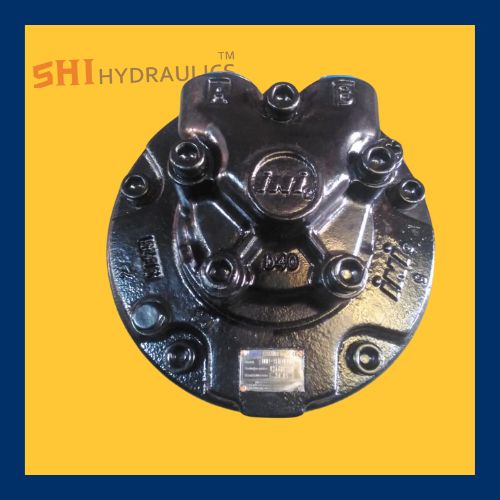
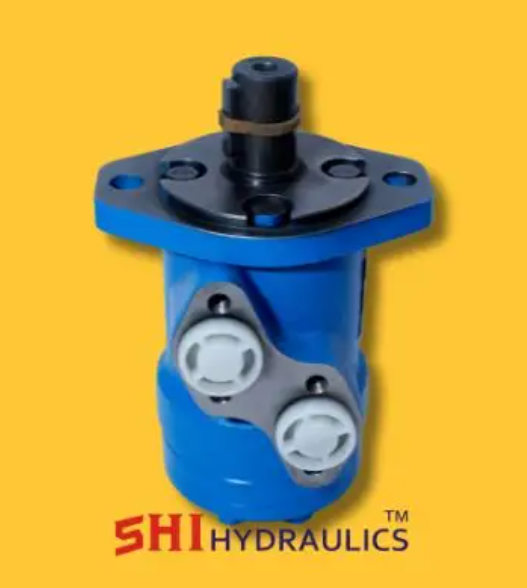
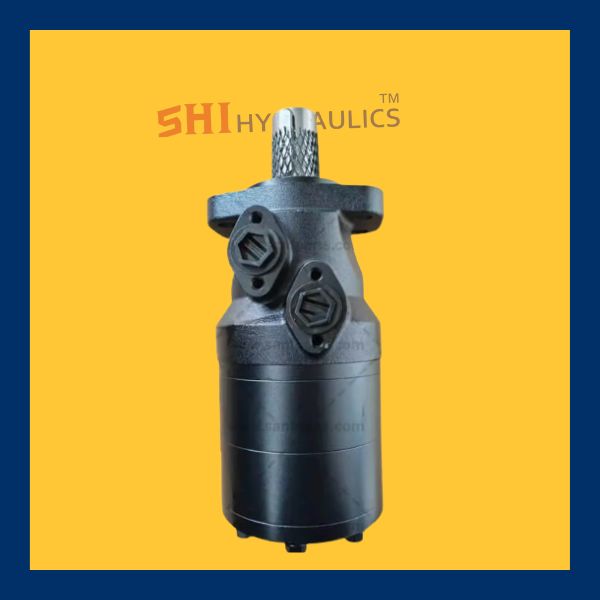
Putzmeister Agitator Hydraulic Motor – OMH-500
Model No: OMH-500
Application: Concrete Pump Agitator Drive
OEM Part No: 238130001 (commonly associated)
Overview:
The OMH-500 hydraulic motor is a robust and high-torque motor engineered for use in Putzmeister concrete pumps, specifically as the agitator motor responsible for driving the mixing paddle within the hopper. Its primary function is to keep the concrete in constant motion, preventing segregation and ensuring a consistent, pumpable mixture.
Key Features:
�� High-Torque Performance:
Designed with a displacement of approximately 500 cc/rev, the OMH-500 delivers high torque at low speeds—ideal for heavy-duty mixing tasks within the concrete hopper.
�� Smooth Agitation Control:
Supports smooth and continuous rotation of the agitator paddles to maintain a homogenous concrete mix, even with coarse aggregates or varying slump levels.
��️ Heavy-Duty Construction:
Built with reinforced cast iron housing and precision-machined internal components for maximum durability under rugged construction site conditions.
�� Mounting & Fitment:
Standard 4-bolt SAE mounting flange and 35mm splined shaft, ensuring a direct replacement fit for OEM Putzmeister setups.
�� Hydraulic Efficiency:
Designed for low leakage and high volumetric efficiency, contributing to better fuel economy and longer hydraulic component life.
Technical Specifications (Typical):
Parameter Specification
Displacement ~500 cc/rev
Max Continuous Speed 155 RPM
Max Intermittent Speed 200 RPM
Max Torque Output Up to 1,200 Nm
Shaft Type Splined (35mm standard)
Mounting Flange 4-bolt SAE
Port Size G1/2' (BSP or SAE, varies)
Operating Pressure Up to 210–250 bar (approx.)
Fluid Type Hydraulic oil (ISO VG 46/68)
Weight Approx. 20–25 kg
Applications:
✅ Putzmeister Concrete Pumps – Agitator Motor (e.g., BSF, TK, P 718 models)
✅ Suitable for retrofitting or replacing damaged motors in hopper mixer drives
✅ Used in OEM and aftermarket repair of ready-mix and shotcrete pump systems
Benefits:
Prevents Concrete Hardening in Hopper
Continuous mixing action prevents concrete from settling or solidifying during pauses in pumping.
Reduces Maintenance Downtime
Durable design reduces the need for frequent servicing or premature replacement.
Improves Pump Efficiency
Ensures consistent flow of well-mixed concrete, protecting the main pumping cylinders.
Horizontal Directional Drilling (HDD) Mud Motors, essential tools for drilling through hard rock formations:
ZH HDD Tooling Mud Motor: Designed for HDD applications, this mud motor efficiently converts hydraulic energy into mechanical rotation, enabling effective drilling in solid rock formations.
StraightLine® HDD Mud Motor: This mud motor features a robust bearing section and is engineered for high torque and slow-speed operation, enhancing bit life and drilling efficiency.
XCMG 5LZ165x7.0 Mud Motor: Specifically designed for XCMG HDD rigs, this mud motor is suitable for complex formations and hard rock drilling. It includes a cavity probe and teeth drill bits, making it versatile for various drilling conditions.
Galip Equipment Mud Motor: Built to handle challenging drilling environments, this mud motor is designed to combat sediment and sand risks during HDD operations.
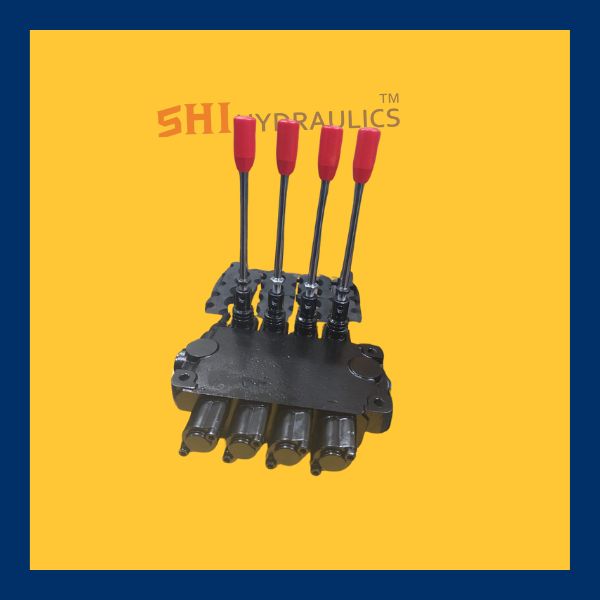
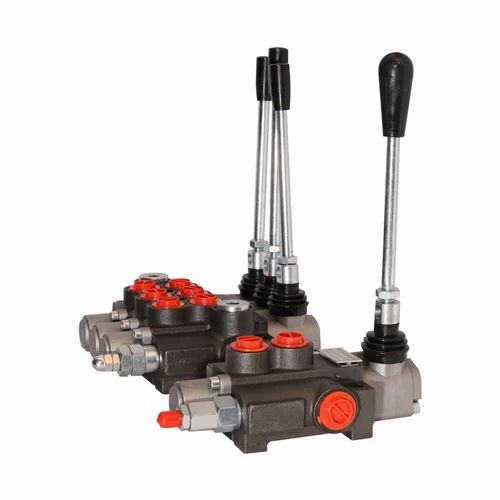
Hydraulic Control Valve
hydraulic control valve is a critical component used in hydraulic systems to control the direction, pressure, and flow rate of hydraulic fluid. The specific valve shown is a multi-spool directional control valve, typically used in mobile and industrial hydraulic equipment.
Key Features:
Multi-Spool Design: Allows independent control of multiple hydraulic functions (e.g., cylinders, motors).
Cast Iron Construction: Ensures durability, high pressure resistance, and a long service life.
Manual/Lever Operation: Operated via levers, which direct hydraulic fluid through different channels based on the spool position.
Pressure Relief Valves: Built-in safety features to protect the system from overpressure.
Multiple Ports: Clearly marked inlet (P), outlet (T), and work ports (A/B) for easy installation and maintenance.
Compact Form Factor: Space-saving design, ideal for mounting in confined areas.
Application: Widely used in agricultural machinery, construction equipment, loaders, cranes, and other mobile hydraulic applications.
Functionality:
Each spool within the valve corresponds to a hydraulic actuator. When a spool is moved, it opens specific internal channels, allowing hydraulic fluid to flow from the pump to a particular actuator, while returning fluid from other actuators back to the tank.
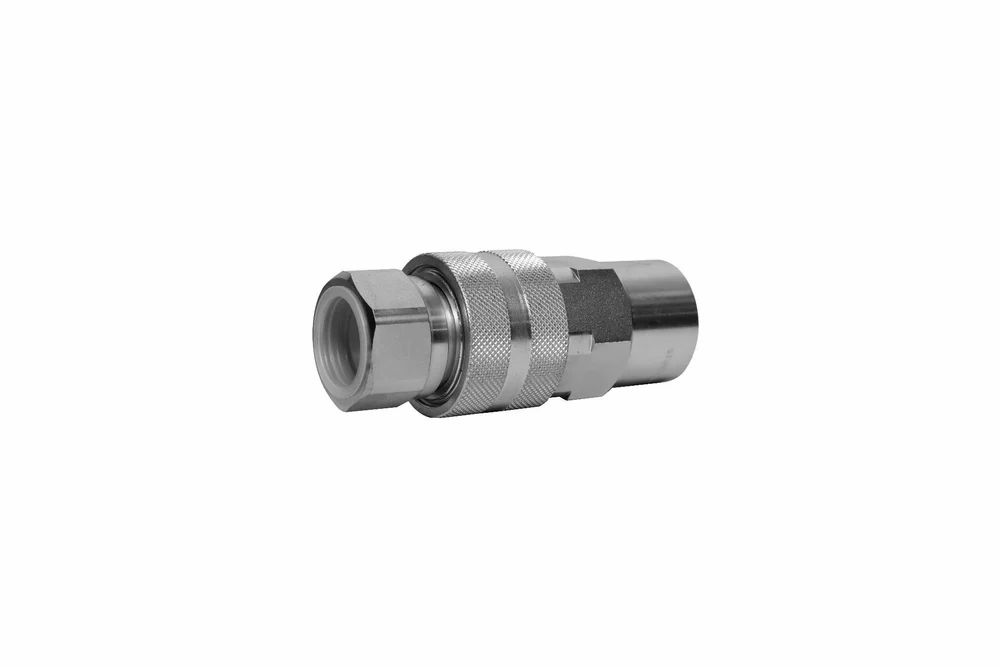
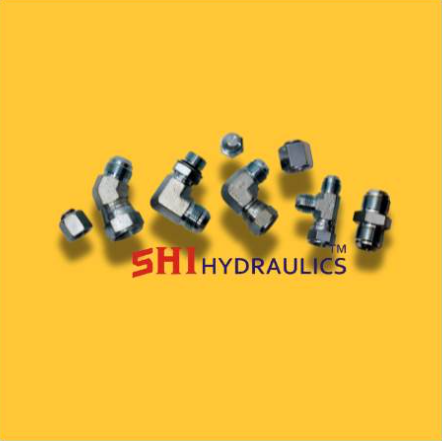
Hydraulic Hose Adaptors at Sonu Hose Pipe
Overview: Sonu Hose Pipe offers a comprehensive range of high-quality hydraulic hose adaptors designed to connect hydraulic hoses with different sizes, fittings, and equipment, ensuring a secure, leak-free, and efficient flow of fluids. Our hydraulic hose adaptors are made from durable materials and are engineered to withstand the high pressures and demanding conditions found in various industries such as construction, agriculture, automotive, and manufacturing.
Size/Diameter 3 inch
Material Brass
Usage/Application Industrial
Color Silver
Finishing Polished
Shape Cylindrical
Product Type Hose Adaptor
Type Hydraulic
Hose Adapters · SS Hydraulic Adapter · Steel Hydraulic Hose Adapter, Size: 2 inch · Plastic Hydraulic Hose Adaptor, Size: 1/2 inch · Mild Steel BSP Hex Adaptor Long ...
Key Features:
Durable and High-Quality Materials: Our hydraulic hose adaptors are made from high-grade steel, stainless steel, brass, and other corrosion-resistant materials that ensure long-term reliability and performance, even in harsh environments.
Wide Range of Sizes and Types: Sonu Hose Pipe offers a wide selection of hose adaptors in various sizes, thread types, and configurations to match your specific system requirements, including BSP, NPT, JIC, SAE, and metric threads.
Leak-Free and Secure Connection: The precision-engineered design of our hydraulic hose adaptors ensures a leak-free and secure connection, reducing the risk of fluid loss and improving system efficiency.
High Pressure Resistance: These adaptors are built to withstand high pressures and maintain performance, even under extreme operating conditions.
Easy Installation: Designed for easy installation, Sonu’s hydraulic hose adaptors can be quickly connected to hydraulic hoses, saving time during setup and maintenance.
Versatile Compatibility: Compatible with a wide range of hydraulic hose types and equipment, our adaptors are the ideal solution for applications that require flexibility in hose connections.
Types of Hydraulic Hose Adaptors:
Straight Adaptors: Used to connect hydraulic hoses to fittings and components that require a direct, linear connection.
Elbow Adaptors (45°/90°): These adaptors are used to change the direction of fluid flow, available in 45° or 90° angles to provide more flexibility in hydraulic system routing.
Tee Adaptors: A T-shaped adaptor that allows you to connect three hoses or components together, often used to split the flow of hydraulic fluid.
Reducing Adaptors: Designed to connect hoses or fittings of different sizes, reducing the need for multiple adaptors and making system design more efficient.
Swivel Adaptors: Equipped with a rotating element, these adaptors allow for movement and prevent strain on hoses and fittings, ensuring long-term reliability.
Banjo Adaptors: Used in applications where a compact, low-profile connection is required, often used in automotive and machinery systems.
Applications:
Hydraulic Systems: Connect hydraulic hoses to various components like pumps, valves, cylinders, and motors, ensuring seamless fluid flow and system operation.
Construction Equipment: Used in machinery such as bulldozers, cranes, excavators, and forklifts to connect hydraulic hoses with different fittings, optimizing fluid transfer.
Agricultural Machinery: Connect hoses in tractors, harvesters, plows, and other agricultural equipment, ensuring reliable hydraulic power for various implements.
Automotive & Transport: Used in the hydraulic brake systems, suspension systems, and steering mechanisms in vehicles and heavy trucks.
Industrial Equipment: Enable smooth operation in manufacturing machinery, power presses, conveyors, and material handling systems by providing secure hose connections.
Marine & Offshore: Adaptors are used in marine hydraulic systems for steering, winching, and fluid transfer applications.
Why Choose Sonu Hose Pipe Hydraulic Hose Adaptors?
Superior Quality: Sonu Hose Pipe's adaptors are crafted using the highest-quality materials and manufacturing standards, ensuring consistent, reliable performance across all applications.
Wide Compatibility: We offer a diverse range of sizes, configurations, and thread types, ensuring that our hydraulic hose adaptors fit your exact needs and can be used with a variety of hose types and fittings.
Performance Under Pressure: Designed to withstand high-pressure applications, these adaptors maintain secure connections, reducing the risk of system failures or leaks.
Cost-Effective Solutions: Sonu Hose Pipe provides reliable and durable hydraulic hose adaptors at competitive prices, delivering great value for your investment.
Expert Support and Service: Our team of experienced professionals is available to help with selection, installation, and troubleshooting, ensuring you get the best performance from our hydraulic adaptors.
Direction Control Valve
Direction Control Valve at Sonu Hose Pipe
Overview: Sonu Hose Pipe offers a wide range of high-performance Direction Control Valves designed to provide precise control over the direction of fluid flow within hydraulic and pneumatic systems. These valves play a vital role in various applications, ensuring fluid is routed to the correct components, enhancing operational efficiency and safety. With durable construction and advanced features, our direction control valves are ideal for a variety of industrial, agricultural, and automotive systems.
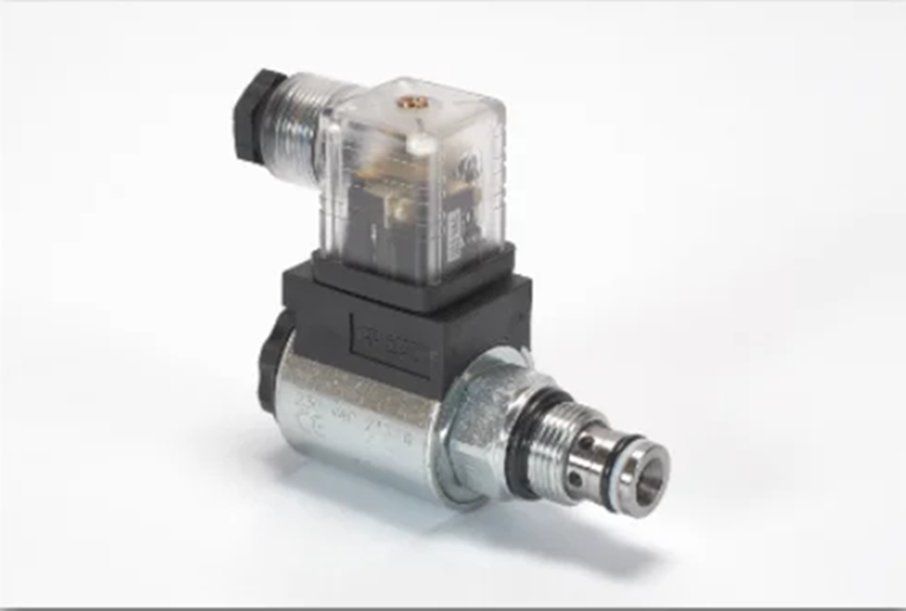
K2DE06
This is a 2 way, 2 position, solenoid operated, direct acting, poppet directional valve. The valve provides a leak-free closure when de-energized, and allows flow in either direction when energized. Due to poppet style construction the valve has extremely low leakage in closed condition.
Key Features:
Precise Flow Direction Control: Our direction control valves are engineered to offer accurate control of fluid flow, allowing you to direct hydraulic or pneumatic fluids to specific areas of your system with ease and precision.
Multiple Configurations: Available in a wide range of sizes, mounting options, and configurations, Sonu direction control valves can be customized to suit your unique operational needs and system requirements.
Durable and Reliable: Constructed from high-quality materials, our valves are built to withstand extreme pressures, temperatures, and working environments, ensuring long-lasting durability and performance.
Simple Operation: With easy-to-understand controls, these valves can be manually or automatically operated, providing flexibility and ease of use in different applications.
Leak-Proof Design: Sonu direction control valves feature advanced sealing technology to prevent leaks and ensure efficient, secure operation, minimizing fluid loss and enhancing system efficiency.
Low Maintenance: Designed with longevity in mind, these valves require minimal maintenance and downtime, reducing overall operational costs and improving system reliability.
Types of Direction Control Valves:
2-Way Direction Control Valves: Used for simple on/off applications, directing fluid to one of two possible paths.
3-Way Direction Control Valves: Offer one inlet and two outlets, directing fluid to one of the two available directions depending on the system's requirements.
4-Way Direction Control Valves: These valves direct fluid to one of four outlets, commonly used in applications like actuating double-acting cylinders, where fluid flow must alternate between two sides of the cylinder.
Rotary Directional Valves: Operate by rotating a spool or disk to direct fluid flow, often used in applications that require more precise control and durability.
Solenoid and Manual Operated Valves: Available in both solenoid-actuated and manual versions, Sonu's direction control valves can be operated via electrical signals or manually for optimal flexibility in various control systems.
Applications:
Hydraulic Systems: Direction control valves are essential in hydraulic systems that require fluid flow direction control for actuators, cylinders, and motors, ensuring smooth operation in machinery like excavators, cranes, and presses.
Pneumatic Systems: Used in pneumatic systems for controlling the movement of actuators, valves, and other components, ensuring optimal flow direction in systems like robotics, packaging, and automation.
Agricultural Equipment: Operate hydraulic systems in tractors, harvesters, and other agricultural machinery to control implements and attachments efficiently.
Automotive and Transport: Direction control valves are critical in controlling hydraulic brake systems, steering systems, and suspension systems in vehicles and heavy equipment.
Manufacturing and Industrial Automation: Enable precise fluid control in various industrial applications such as presses, assembly lines, and conveyors, enhancing production efficiency.
Why Choose Sonu Hose Pipe Direction Control Valves?
High Performance: Sonu’s direction control valves are engineered for optimal performance, delivering precise control of fluid flow to ensure smooth operation of your system.
Durability and Longevity: Our valves are designed to handle the toughest conditions, built with durable materials that ensure reliability and a long service life.
Customization: We offer a wide range of options in terms of pressure ratings, sizes, and configurations to meet the specific needs of your hydraulic or pneumatic system.
Cost-Effective: Sonu direction control valves offer excellent value, balancing performance and affordability to help you optimize your system without compromising on quality.
Expert Support: Our experienced technical team is always available to assist with selecting the right valve for your application, providing installation guidance, and offering ongoing support.
Hydraulic Control Valves at Sonu Hose Pipe
Sonu Hose Pipe provides a high-quality range of hydraulic control valves, specially designed to manage and control the flow and pressure of hydraulic fluids in various systems. Our hydraulic control valves are engineered to offer precision, reliability, and enhanced performance, making them the ideal choice for industries such as construction, manufacturing, agriculture, and more.
Operating Pressure 40 bar
Media Water
Valve Type Control Valve
Material Mild Steel
Power Hydraulic
Usage/Application Industrial
A hydraulic control valve regulates the flow and pressure within a hydraulic system. It directs the fluid to different parts of the system, ensuring optimal performance.
Key Features:
Precision Flow and Pressure Control: Sonu’s hydraulic control valves are built to regulate fluid flow with high accuracy, ensuring optimal system performance and preventing damage due to overpressure or improper flow.
Durability and Robustness: Made from durable materials like stainless steel and high-grade alloys, our hydraulic control valves are designed to withstand extreme pressure, temperature, and operational conditions.
Versatile Functionality: Suitable for a wide range of hydraulic applications, including fluid power systems, heavy machinery, construction equipment, and manufacturing processes.
Leak-Proof Operation: Advanced sealing technology ensures leak-free and efficient operation, reducing maintenance costs and extending the lifespan of the valve and connected components.
Easy Installation and Maintenance: With user-friendly designs, Sonu hydraulic control valves are easy to install and maintain, reducing downtime and ensuring smooth operations.
Customization Options: Available in a variety of sizes, pressure ratings, and flow capacities, allowing you to tailor the valves to meet your specific requirements.
Types of Hydraulic Control Valves:
Pressure Relief Valves: Protect hydraulic systems from excessive pressure by diverting fluid when it reaches the set limit, preventing damage to components.
Flow Control Valves: Regulate the flow rate of hydraulic fluid, ensuring the correct flow speed for various system components.
Directional Control Valves: Control the direction of hydraulic fluid flow to specific parts of the system, ensuring smooth operation of cylinders, motors, and other hydraulic components.
Proportional and Servo Valves: Offer precise control of flow and pressure, ideal for systems requiring fine-tuned adjustments.
Applications:
Construction Equipment: Control the hydraulic systems of excavators, cranes, bulldozers, and other heavy machinery.
Agricultural Machinery: Manage the hydraulic systems of tractors, harvesters, and plows for optimal operation.
Manufacturing and Production: Efficiently manage hydraulic circuits in presses, conveyors, and production lines.
Oil & Gas Industry: Control and regulate the flow of fluids in drilling, pumping, and pipeline systems.
Automotive & Transport Systems: Manage hydraulic brakes, suspension systems, and steering in vehicles and heavy trucks.
Why Choose Sonu Hose Pipe Hydraulic Control Valves?
Industry Expertise: With years of experience in providing high-quality hydraulic products, Sonu Hose Pipe is trusted by industries worldwide.
State-of-the-Art Technology: We use the latest hydraulic valve technologies to deliver high-performance products that meet stringent industry standards.
Reliability and Performance: Sonu hydraulic valves are known for their superior reliability, helping to minimize downtime and maximize efficiency.
Customer Support and Service: We offer expert technical assistance, installation guidance, and after-sales support to ensure you get the best value from our products.
Hydraulics Motors
Hydraulics Motors
is a mechanical actuator that converts hydraulic energy (fluid power) into rotational mechanical energy. It is part of the broader category of hydraulic machinery used in a variety of industrial applications, from manufacturing to construction, where rotary motion is required. Hydraulic motors are powered by pressurized hydraulic fluid supplied by a pump, and they are capable of generating high torque at low speeds, making them essential for demanding tasks
The hydraulic motors operates on the principle of fluid power, which involves the use of pressurized fluid to generate motion. A hydraulic consists of an enclosed rotor or shaft connected to gears, pistons, or other mechanical components,
Pressurized Fluid Inflow: The hydraulic pump sends pressurized fluid to the hydraulic through an inlet port.
Rotational Motion: As the fluid enters the it pushes against the internal components (such as gears or pistons), causing the rotor or shaft to rotate.
Exhaust Flow: Once the fluid has passed through the , it exits via an outlet port, typically at a lower pressure than it entered.
The rotational speed and torque output of the are determined by the pressure of the fluid and the design of the motor itself. Hydraulic motors can produce high
Types
There are several types of hydraulic motors, each designed for specific applications and performance requirements. These include:
Gear:
External Gear These consist of two meshed gears that rotate to generate torque. The fluid is directed between the gears, causing them to spin.
Internal Gear : These have a smaller gear rotating inside a larger gear. They are more efficient than external gear motors and are capable of producing higher torque output.
Vane
These use sliding vanes mounted on a rotor to create pressure chambers as the spins. The vanes push against the walls of the housing, generating rotational motion. V
Piston :
Axial Piston : In these motors, pistons are arranged parallel to the shaft and move back and forth. The fluid forces the pistons to generate motion along the shaft.
Radial Piston Here, the pistons are arranged radially around the motor shaft. These motors are known for their ability to generate high torque at lower speeds,
Rotary Vane
These motors consist of a rotor and vanes that slide in and out to create pressurized chambers. The chambers drive the motor’s
Applications
Construction Machinery: Hydraulic motors are integral to the operation of equipment like excavators, cranes, bulldozers, and wheel loaders,
Agriculture: These motors drive implements such as augers,
Marine and Offshore: Hydraulic motors are used to power winches, thrusters, and other machinery in marine vessels and offshore oil rigs. Industrial Automation:
Automotive: In automotive applications, hydraulic motors are used in systems such as steering, lifting equipment, or as part
High Torque at Low Speeds:
Efficiency:
Compact Design:
Durability and Reliability: T
Precise Control:
Leakage and Fluid Loss:
Noise and Heat Generation:
Maintenance:
Sensitivity to Contaminants:
Vane motors use a rotor with sliding vanes that are forced outward by centrifugal force as the rotor turns. The vanes create pressurized chambers, which generate rotational motion. Vane motors are known for smooth operation and high efficiency, particularly at low speeds, and are often used in applications where quiet and steady performance is required.
Axial Piston Motors: These motors have pistons arranged parallel to the motor shaft. As hydraulic fluid forces the pistons to move back and forth, it causes the motor shaft to rotate.
Hydraulic fittings are crucial components in hydraulic systems, connecting hoses, pipes, and tubes to direct and control the flow of hydraulic fluid under high pressure. Designed to ensure leak-proof connections and reliable performance, these fittings play a vital role in maintaining system efficiency, safety, and durability. Used across industries such as construction, agriculture, aerospace, and manufacturing, hydraulic fittings come in various materials, types, and configurations to suit specific applications.
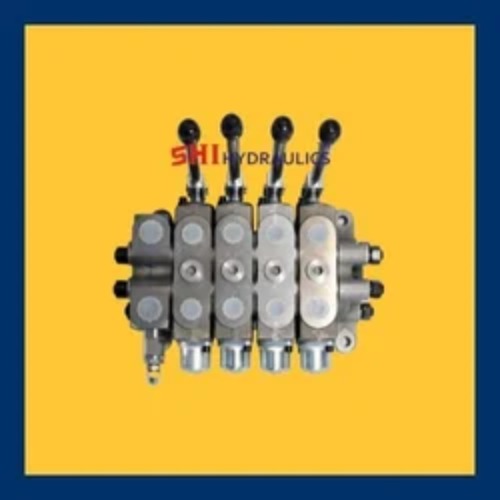
HDD Control Valves Control valves** in HDD rigs manage the direction, flow rate, and pressure of hydraulic fluids powering various components, such as:
Thrust/pullback systems
Drill rotation motors
Clamp/vise actuators
Pipe loader arms
Mud pump drive systems
They can be manual, pilot-operated, or electro-hydraulic depending on system complexity.
�� 2. Types of Valves Used in HDD Systems
Valve Type Function Common Placement
Directional Control Valve (DCV) Directs flow to actuators (e.g. extend/retract cylinders) Main hydraulic circuits
Flow Control Valve Regulates speed of actuators by limiting flow Rotation/thrust speed adjustment
Pressure Relief Valve Protects system from overpressure Inline with all major circuits
Pilot-Operated Check Valve Locks actuators in place under load Clamp and rotation holding systems
Solenoid Valve Electrically controlled valve for automated function Remote or onboard controls
Load-Sensing Valve Adjusts flow based on demand, improving efficiency Advanced HDD rigs
⚙️ 3. Features:
High pressure handling (up to 5000 psi / 350 bar)
Compact modular manifolds for integrated control
Stackable for space-efficient designs
Available in cartridge or monoblock forms
Options for manual levers, electric joystick, or remote radio control
�� 4. Specifications (Typical):
Spec Value
Flow Rate 20–150 L/min
Pressure 210–420 bar (3000–6000 psi)
Ports BSP, NPT, or SAE
Control Manual, electric, or hydraulic pilot
Material Steel or cast iron (plated for corrosion resistance)
�� 5. Brands Used in HDD Machines:
Rexroth (Bosch)
Parker Hannifin
Hydac
Sun Hydraulics
Danfoss / Eaton
Walvoil, Yuken, and Atos
�� 6. Applications in HDD Rigs:
System Valve Role
Thrust/Pullback Directional & flow control for hydraulic cylinders
Rotation Drive Speed & torque control via flow/pressure regulation
Clamp/Vise Check valves to hold position under load
Rod Loader Directional valves for actuator motion
Drill Head Steering Fine pressure and flow adjustments for steering nozzles
�� 7. Maintenance & Troubleshooting:
Regularly inspect for leakage, spool stickiness, or overheating
Ensure filters are clean to avoid contamination wear
Check for correct voltage on solenoid coils
Use diagnostic tools to monitor pilot pressure and feedback